Confronting the Past

A Christmas Carol Series ~ Stave Two

It’s hard to appreciate a sunny sky is if you’ve never endured a dreary day.  Can you really know companionship if you have never experienced loneliness?  And it is such a contrast that we see in Stave Two when the Ghost of Christmas Past takes Scrooge to the school house.  We don’t see the crusty curmudgeon who chases away an innocent caroler with a ruler.  We see a young, helpless boy who is a victim of his circumstances that are beyond his control.  We get a glimpse of what has made this person we know as Scrooge.  Events in our past shape the way we show love in our present and future.

When we are vulnerable, we cannot help what happens to us.  Friends and family repeatedly forgot Scrooge when he was a boy.  Some of these undoubtedly were acts of omission and some acts of commission.  We can be reasonably sure that his friends didn’t intentionally leave him in the school house when Christmas recess came.  They were focused on their own families coming to retrieve them.  The fact that his own family left him is more overt.  We are never given a glimpse of why his father left him at the school, but we see the result.  We see the lonely boy, and we see the pain the memory of the occasion still elicits in the calloused man.  The fact that Scrooge experienced that rejection and the fact that he still dealt with the pain of it decades later were beyond his control.  

Our power lies within the ways we respond to our past.  Scrooge carried the pain of abandonment.  His pain drove him to set up a financial empire so he would never again be powerless, and his zeal strangled the love in his life.  His pain multiplied.  But later in life, he held the power of choice when it came to his interactions with his nephew and his clerk.  We all have events in our past that were thrust upon us, and those events still rear their heads in our present.  However, we hold the power to decide the level of impact those events continue to hold over us.  Especially, when it comes to the way we treat others around us, we hold the power as the to the direction that impact will take us.

Discussion Questions

Think of the unpleasant dealings Scrooge had with people with during Christmas Eve morning: Bob Cratchit, Fred, his nephew, the young caroler, the business men seeking donations for the poor.  How did those present day dealings relate to moments of his past?

What made Scrooge begin to reflect on the way he had recently treated people?

Why did he begin to desire to change?
Choices

A Christmas Carol Series ~ Stave Two

It’s hard to appreciate a sunny sky is if you’ve never endured a dreary day.  Can you really know companionship if you have never experienced loneliness?  And it is such a contrast that we see in Stave Two when the Ghost of Christmas Past takes Scrooge to the school house.  We don’t see the crusty curmudgeon who chases away an innocent caroler with a ruler.  We see a young, helpless boy who is a victim of his circumstances that are beyond his control.  We get a glimpse of what has made this person we know as Scrooge.  Events in our past shape the way we show love in our present and future.

When we are vulnerable, we cannot help what happens to us.  Friends and family repeatedly forgot Scrooge when he was a boy.  Some of these undoubtedly were acts of omission and some acts of commission.  We can be reasonably sure that his friends didn’t intentionally leave him in the school house when Christmas recess came.  They were focused on their own families coming to retrieve them.  The fact that his own family left him is more overt.  We are never given a glimpse of why his father left him at the school, but we see the result.  We see the lonely boy, and we see the pain the memory of the occasion still elicits in the calloused man.  The fact that Scrooge experienced that rejection and the fact that he still dealt with the pain of it decades later were beyond his control.  

Our power lies within the ways we respond to our past.  Scrooge carried the pain of abandonment.  His pain drove him to set up a financial empire so he would never again be powerless, and his zeal strangled the love in his life.  His pain multiplied.  But later in life, he held the power of choice when it came to his interactions with his nephew and his clerk.  We all have events in our past that were thrust upon us, and those events still rear their heads in our present.  However, we hold the power to decide the level of impact those events continue to hold over us.  Especially, when it comes to the way we treat others around us, we hold the power as the to the direction that impact will take us.

Discussion Questions

What are the different scenes and details Dickens uses to set up the contrast of seeing young Scrooge alone in the school room?
What do you think and feel when you see young Scrooge sitting alone?
What differences do you see between the Scrooge at Fezziwig’s shop and the one whom we greet at the beginning of the story?  How do you account for the difference?
Is there any conflict in Scrooge as he watches the girl walk away?  If so, how do we know?
How might his past experiences impact his present relationships?  With Bob Cratchit?  With Fred?


Missed Opportunity

A Christmas Carol Series ~ Stave One

“It is required of every man,” the Ghost returned, “that the spirit within him should walk abroad among his fellow-men, and travel far and wide; and if that spirit goes not forth in life, it is condemned to do so after death. It is doomed to wander through the world—oh, woe is me!—and witness what it cannot share, but might have shared on earth, and turned to happiness!”

page 16, Dover Thrift Editions

You see a kitten shivering on the curb in a downpour.  You see an a stooped-over, white haired woman holding a sack of groceries and struggling to lug her walker onto the bus.  You see a young girl in a stained, tattered dress looking longingly at a cheap doll on the store shelf as you hear her mother say “We just don’t have the money.”

It has been put in us by our Creator to want to help.

Marley shows us the abject frustration that arises from losing the ability to give care and compassion to fellow travelers in this world.  From his multiple utterances, “woe is me,” to his outburst of pure aggravation with Scrooge for not being accepting of the chance that Marley is supernaturally providing him, his despondency at his lost opportunity to help is stark.

Many changes happen inside of us when we begin to take on the image of Christ.  One key change is in how we look at helping people.  When you follow Christ, the opportunity to help others transforms from drudgery to opportunity.

Marley, who like Scrooge, never bothered to look up from his financial registers found himself in a position where now he could not look down.  All he could see was need, but he had no ability to meet the need.  And now his lack of ability fills him with remorse.  When we finally help someone, it feels good.  When we see someone going without, it feels empty.  While we live in this life, we have the option to avoid the feelings of remorse and fill ourselves with the satisfaction of having done good.  But what if we lose that opportunity?

Discussion Questions

What is the significance of Marley’s chains and the ledgers and cashboxes connected to it?
When Scrooge tells Marley he doesn’t believe he is really there, why does Marley cry out?
What motivates Marley to appear to Scrooge?
Explain what Marley means when he says “Woe is me.”


Are You Putting Yourself Out There?

A Christmas Carol Series ~ Stave One

Are you putting yourself out there?  Have you ever been asked that question?  It might relate to making friends—  Are you making yourself approachable so that others know you are not closed off?  Or it might relate to romantic involvement—  Are you sending the signals to that special someone so he or she might know you are interested?  A third possibility relates to your professional endeavors—  Are you taking on the projects and producing a work load that is going to get you noticed?  But for the follower of Christ, it has a different application.

In Scrooge, we see the anti-type of a follower of Christ.  He underpays his clerk and makes him work in deplorable conditions.  He spurns the unconditional offers of love and friendship from his nephew.  And he antagonizes the charitable gentlemen who want nothing but a small donation with which to do good.  Scrooge is certainly not putting himself out there.

For the follower of Christ, the corollary to the Great Commandment exemplifies putting oneself out there.  When Jesus said “…and a second which is like it: love your neighbor as yourself,” he gave us the supreme guidance for putting ourselves out there.  And it is not so we can receive the benefit.  It is so those around us can benefit. How does the follower of Christ put himself or herself out there?  They do it by finding an object of Christ-like love.

Discussion Questions

Who in Stave One was putting themselves out there?
How had Scrooge closed himself off?
How had Scrooge’s pursuit of success caused him to deal with the people around him?  (How had it made him deal with Bob Cratchit?  How had it made him deal with his nephew, Fred?  How did it make him respond to the two gentlemen seeking donations?  Others?)
Do you see any tendencies of Scrooge in yourself?
Who are you likely to cross paths with tomorrow that could use a simple demonstration of love?

Refocusing Christmas

Do you ever feel like Christmas needs to be refocused?

Christmas is a celebration of the one whose birth we celebrate.  Dickens wrote A Christmas Carol because he saw how far many had drifted from the principles that undergirded the day.

Join me in reading A Christmas Carol to sharpen the focus of Christmas.

Over four weeks starting the day after Thanksgiving, we will read together, think about and apply the lessons that Scrooge learned as he traveled with the spirits on that Christmas Eve178 years ago.  We will take lessons specifically regarding how a Christian should approach Christmas time and the reading of this classic.

Why Everyone Should Write

If you’re not writing, you don’t know what you’re missing.  Writing gives you a perspective you won’t get any other way.   Everyday thoughts and emotions swirl in your head and heart always barely eluding your grasp.  Then they fester and eventually surface at times and in ways you don’t want.  However, pouring your thoughts on paper (or screen as the case may be) tames them.

We store our memories and their attached emotions in the limbic area of the brain.  The limbic is not quite the subconscious because we are aware of it, but it is not as easily accessed as other parts of the brain.  The neo-cortex, or frontal lobe, is the power house for logic and ration.  When poor patterns of thinking trap us, it’s because we are dealing with our emotions and memories without getting logical perspective.  The physical act of writing (or typing) builds a bridge between the neo-cortex and the limbic system.  The result: you process your emotions logically instead of… well… emotionally.*

So even if you never publish a word, there is benefit in writing.  You will be more in touch with what you are feeling and why.  Being more connected with yourself makes you more settled and stable.  So, write!

(* The sources documenting how emotional memories of the limbic system function are many.  This is certainly not my original thought, but it is so well and widely documented that it can be considered common knowledge.)

This Always Takes Me Back

The winter storm whistles through the oak trees outside my second story bedroom window.  The acorns pop against the roof so thunderously I swear Marley’s ghost is ascending the stairs.  The draft from the windows drifts across the room.  I pull the covers closer around my shoulders, and I tap the right side of my Kindle advancing the page.  It’s my yearly custom— reading A Christmas Carol.  Dickens creates a world so immersive that I am transported there even now as I recall my experiences of reading it.

This book has captivated me for almost fifteen years now.  When I was on my first deployment to Iraq in 2008, I decided to read it on a whim.  Dickens drew me in.  The book hooked me, and since then, every year beginning on Thanksgiving weekend, I read it again.  Often I read it twice before Christmas.  It is a short but powerful read.  I savor every sentence letting it set me in mid-nineteenth century London and letting it fill me with feelings of regret, angst, hope and redemption.  It became a companion to me at a time when I was separated from family during the most family-centric time of year.  And since then, it has become a part of who I am and who I am still becoming.

I would love for you to join me this year.  Beginning Thanksgiving weekend, I will post a thought and a discussion question twice a week from A Christmas Carol.  We will cover one stave per week (for those who are not as familiar, Dickens wrote this piece in five staves rather than chapters) and will conclude the week of Christmas.  If you plan to join the rest of us, drop a comment.  A simple “I’m in.” will  suffice…or even a “bah…humbug.”  Or you can even just like this post.  I will look for you in the comments!

Prompted Writings

What are Prompted Writings? See here

Prompt: That was his idea not mine

First draft:

“That was his idea, not mine,” Molly shouted.  Molly referred to her twin brother Mitchell.  Their older sister Emily who was on babysitter duty heard the commotion and came to investigate.  Upon entering the room, Emily found the two younger ones engaged in hot debate, and when she inquired as to what was going on, it prompted Molly’s declaration.
“What idea?  What are you talking about?”  Emily asked.
“Nuh-uh!!”  Mitchell protested.  “It was not!  And she was the one who flipped the latch on the cage.”  Emily glanced at Pippen’s cage in the corner.  Pippen was their twenty-five year old Macaw.  Their parents had gotten Pippen early in their marriage— long before they had any of the kids.  And since Macaws live to an average age of seventy-five, he was still relatively a youngster.  Upon Emily’s inspection, the cage door was indeed open.  But Pippen was nowhere in sight.
“So who opened the cage door?”  Emily’s voice was a mixture of calm investigator and annoyed older sister.
“She did!  She did!” Blurted Mitchell.
“But I’m not the one who opened the window,” Molly shouted.  Emily snapped her attention to the window that hung open.  She briskly walked to the window to inspect it.
“This window?  You opened this widow after Pippen got out of his cage?”  The panic in her voice was rising.
“Pippen said he wanted it open,” Mitchell defended his action.  And his voice warbled as he said it.  Emily snapped her attention back over to Molly.  Her eyes were welling up now and tears spilled down her cheeks.
“We called and called to him, but he didn’t come back,” Molly said between sobs.   
Dad had been working on the screens so they had been taken down.  There was nothing separating Pippen from the wild blue yonder, and he exploited his advantage and was somewhere in the neighborhood probably right now trying to talk to a very unsuspecting pigeon.

First revision:

“That was his idea, not mine,” Molly shouted referring to her twin brother Mitchell.  She was responding to their older sister Emily who was heard the commotion and came to investigate. 
“What idea?  What are you talking about?”  Emily asked.
“Nuh-uh!!”  Mitchell protested.  “It was not!  And she was the one who opened the cage.”  Emily glanced at Pippen’s cage in the corner.  Pippen was their twenty-five year old Macaw.  Their parents had gotten Pippen early in their marriage— long before they had any of the kids.  And since Macaws live to an average age of seventy-five, he was still relatively a youngster.  The door was indeed open.  But Pippen was nowhere in sight.
“So who opened the cage door?”  Emily’s voice was a mixture of calm investigator and annoyed older sister.
“She did!  She did!” Blurted Mitchell.
“But I’m not the one who opened the window,” Molly shouted. 
“This window?”  Panic welled in Emily’s voice.  “You opened this window after Pippen got out of his cage?”
“Pippen said he wanted it open,” Mitchell defended his action.  And his voice warbled as he said it.  Emily snapped her attention back over to Molly.  Her eyes were welling up now and tears spilled down her cheeks.
“We called and called to him, but he didn’t come back,” Molly said between sobs.   
Dad had been working on the screens so they had been taken down.  There was nothing separating Pippen from the wild blue yonder, and he exploited his advantage and was somewhere in the neighborhood probably right now trying to talk to a very unsuspecting pigeon.

Be the Plant

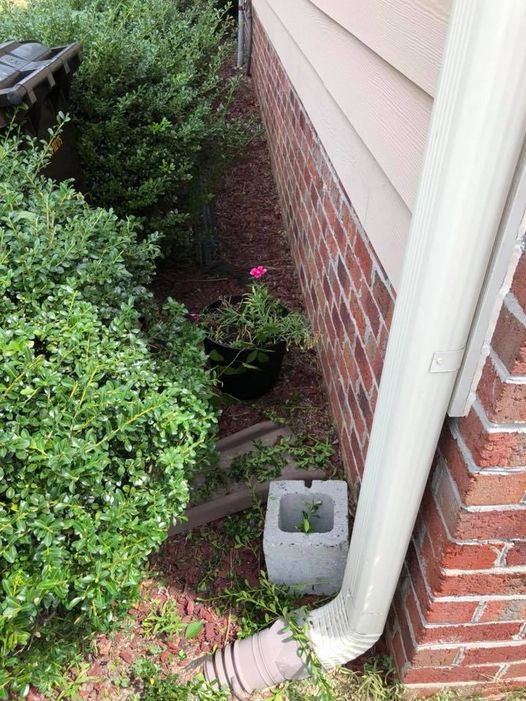
One Spring when we lived in Spring Lake, NC, I bought some flowers for our front porch. Not being much of a horticulturist, I didn’t take into account the amount of sun the plant was suited for and I got something that was fairly low light even though our porch had direct sunlight for probably close to eight hours. Needless to say, the plant died a quick and scorching death. I threw the pot behind the shrubs thinking I would take care of it later. (Don’t judge me. You know you do it, too.) Fast forward to September of that same year. I was trimming the hedges and I discovered this.

What was thought to have died sprouted new life. Remember that this is what God does with us. When we are dead in our sins, he gives new life. When we encounter hardship to the point that we despair even of life (2 Cor. 1:8-9), he gives new life and brings good out of anything (Rom. 8:28-29). What’s the lesson? Whatever you are going through right now, be the plant.

Dealing with Questions About Faith ~ Leap of Faith Required

John 20:19-31

Jesus acknowledges the leap of faith we must take to profess belief in him.  He is leading the disciples to a declaration of belief.  Put yourself in their shoes.  Can you imagine them feeling like this:  “Lord, you convinced us that you are the Messiah.  We believed all you taught us.  But now you’re dead and we are in danger of being rounded up.  Lord, we are scared and confused.”  Remember, their world had crumbled around them.

Jesus doesn’t rebuke or condemn Thomas or the others for needing to see the proof of his wounds.  He reassures them.  He shows them his wounds and then says “Peace.”  When Jesus does this, Thomas declares: “My Lord and my God.”  Thomas was saying more than just that he believed now that Jesus had come back from the dead.  He professed his belief in Jesus as God himself.  This declaration is the denouement— the resolution of the plot.  It is the place to which Jesus leads all of the disciples.  Including you and me.

To follow Jesus is to make this declaration.  You are saying the following: I believe you eternally exist, I believe you were born of a virgin, I believe you died but came back to life three days later, and I believe you sit now at the right hand of God, and I believe you are bringing about your purpose in the world.  It takes no less of a leap of faith now as it did then.  And when you have to navigate the rugged terrain of that road of belief, Jesus knows and understands the leap of faith you must make.  And he is there to help you along that road of belief.